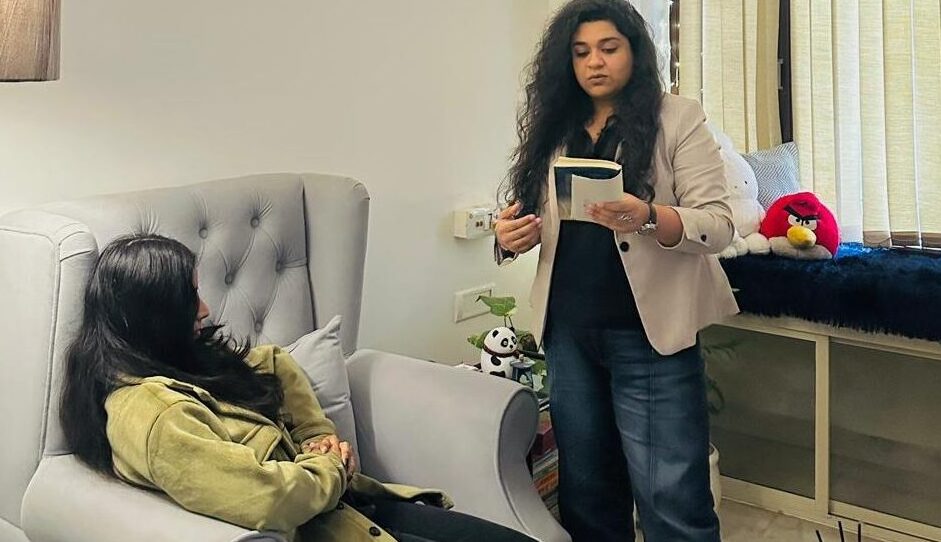
If you have been searching for the best therapy for OCD in 2026, the answer has not changed — and it is not going to change anytime soon. The treatment with the strongest, most consistent scientific proof for Obsessive-Compulsive Disorder is Exposure and Response Prevention (ERP) Therapy. It is recommended as the first-line psychological treatment by the International OCD Foundation, the American Psychiatric Association, the UK’s NHS, and the Indian Journal of Psychiatry. ERP works not by talking you out of your fears, but by gently helping you face your triggers and resist the compulsions that follow — so your brain finally learns that the danger was never real. This blog explains exactly why psychologists in Gurgaon and across the world continue to recommend ERP as the gold-standard treatment, and what makes it work when other therapies don’t.
This recommendation is echoed strongly by Rishika Vashishtha and Meenakshi Malik, two of Gurgaon’s most experienced Licensed Clinical Psychologists, who work specifically with OCD patients using current ERP protocols. Both are Co-Founders at their clinic, registered with the Rehabilitation Council of India, and bring over five years of evidence-based clinical experience each.
Their daily practice tells the same story the research does — ERP is not just a treatment for OCD. In 2026, it is still the treatment.
Why OCD Is So Hard to Treat With Regular Therapy
Most people with OCD have tried something before they discover ERP. They have tried talking it out. They have tried mindfulness apps. They have tried gentle counselling. They have tried medication alone. Some have tried all of the above for years. And yet, the obsessions keep returning, the compulsions keep growing, and life keeps shrinking.
The reason is simple but uncomfortable — OCD does not respond to general therapy the way other anxiety conditions do. Talking repeatedly about your fears, getting reassurance from a therapist, or trying to understand where your obsessions came from often feeds the loop rather than breaking it. Every reassurance teaches your brain that the obsession was important enough to need answering. Every long discussion about whether the gas was really off acts like a mental compulsion in disguise.
This is exactly why so many people in Gurgaon have spent lakhs on counselling over many years and still feel stuck. Not because therapy failed them. Because they were never given the right therapy.
What Makes ERP the Best Therapy for OCD in 2026
ERP — short for Exposure and Response Prevention — is a specialised form of Cognitive Behavioral Therapy designed only for OCD and a few closely related conditions. It works on two principles that no other talk therapy combines.
Exposure means deliberately and gradually facing the very thoughts, images, or situations that trigger your obsessions, in carefully designed steps.
Response Prevention means choosing not to perform the compulsion that usually follows — under the guidance of a trained psychologist.
This combination interrupts the OCD loop at its weakest point. Each successful exposure teaches your brain something powerful: the feared outcome did not happen, and you survived the anxiety without performing the ritual. Repeated enough times, the obsession itself loses its grip.
According to large-scale clinical reviews, around 70% of people who complete a full course of ERP experience meaningful, lasting reduction in OCD symptoms. No other psychological treatment for OCD comes close to this number — not regular CBT alone, not psychoanalysis, not hypnotherapy, not coaching.
This is why every major mental health body in 2026 still ranks ERP as the gold standard.
How ERP Stops the Compulsion Cycle
OCD runs on a four-step loop — an obsession appears, anxiety rises, you perform a compulsion to bring the anxiety down, and you feel temporary relief. That relief teaches your brain that the obsession was a real threat, so the obsession returns stronger.
ERP attacks this loop at the gap between obsession and compulsion. Here is how:
- Step 1 — Mapping your OCD: Your psychologist begins by understanding the unique shape of your OCD. Two patients with “contamination OCD” can have entirely different triggers, compulsions, and avoidance patterns.
- Step 2 — Building your exposure hierarchy: Together you build a personal ladder of triggers, from least to most anxiety-provoking. You only climb at your own pace.
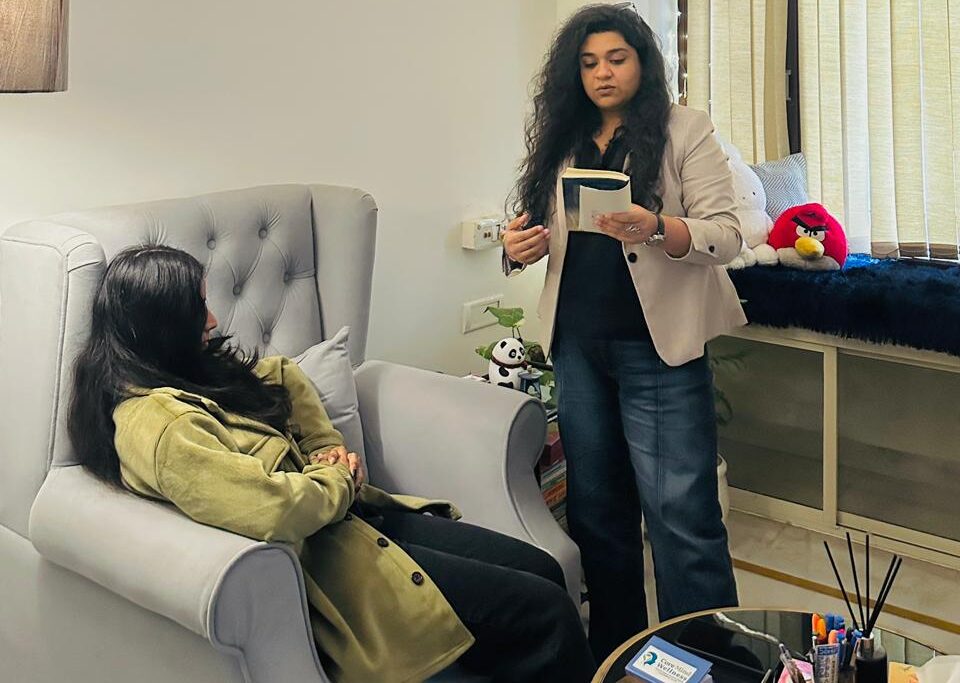
- Step 3 — Doing the exposures: With your therapist’s support, you face a trigger and resist the compulsion. The anxiety naturally peaks and then falls. Your brain learns something it has never been allowed to learn before.
- Step 4 — Generalising the wins: Successes in the therapy room are transferred to real life — at home, at work, in social settings.
- Step 5 — Relapse prevention: You learn how to spot warning signs early and run mini-exposures on your own, so the loop never rebuilds itself.
This structured approach is exactly why ERP outcomes hold up so well over the long term — far better than medication alone.
Why You Need a Trained ERP Specialist
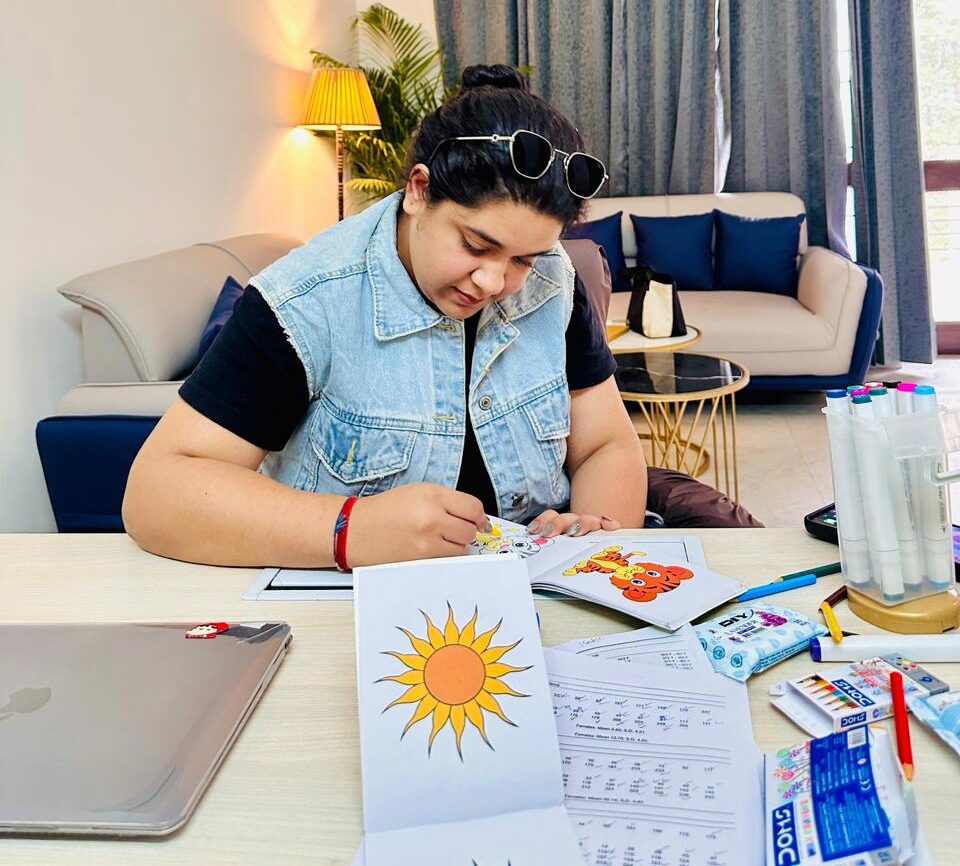
ERP looks simple on paper but is genuinely difficult to deliver correctly. Done by an untrained counsellor, exposures can be too rushed or too vague, response prevention can be incomplete, and OCD can worsen. This is why a true OCD psychologist in Gurgaon must be specifically trained in ERP protocols.
At Core Mind Wellness in Gurgaon, Rishika Vashishtha and Meenakshi Malik deliver ERP using current, research-supported protocols rather than older or generic versions of exposure therapy. Both are RCI-licensed clinical psychologists, both are pursuing their Ph.D. in Clinical Psychology, and both have spent years specifically training in OCD and anxiety-spectrum disorders. They work with adults, adolescents, and children, both in-clinic and online.
A Realistic Example
Consider a hypothetical case — Neha, a 27-year-old teacher from Sector 47, struggled with contamination OCD for six years. She washed her hands until her skin cracked and refused to eat anywhere outside her home. After two years of regular counselling that didn’t help, she began ERP. Her hierarchy started with touching a slightly “unclean” object and waiting only two minutes before washing. Two minutes became fifteen. Within four months, she was eating at restaurants again. Her OCD did not disappear completely — but it stopped running her life. That is the realistic outcome of well-delivered ERP. Not magic. Just science, applied properly.
Take the First Step
If OCD has been quietly stealing your time, sleep, and confidence — you do not have to live another year inside the loop. The first session is never an exposure. It is simply a calm conversation where your psychologist listens, understands your OCD, and explains the road ahead.
📞 Call or WhatsApp: +91 9319136642 📧 Email:
📍 Visit: H. No. 159, 1st Floor, Sector-28, Gurugram, Haryana-122002
Recovery from OCD is real, evidence-backed, and closer than you think.
Frequently Asked Questions (FAQs)
Q1. Is ERP really the best therapy for OCD in 2026?
Yes. Every major mental health authority in the world — including the International OCD Foundation, the APA, the NHS, and the Indian Journal of Psychiatry — continues to list ERP as the first-line treatment for OCD. No other psychological therapy has matched its outcomes.
Q2. How long does ERP take to work?
Most people complete active ERP within 14 to 20 sessions, spread over three to five months. Milder OCD may improve faster, while complex cases may need a longer course.
Q3. Will I need medication along with ERP?
Not always. Many people respond very well to ERP alone. For moderate to severe OCD, combining ERP with an SSRI (prescribed by a psychiatrist) often gives the strongest outcomes.
Q4. Is ERP painful or scary?
ERP is challenging but never traumatic. Exposures are built collaboratively, starting at the easiest level, and you are never forced into anything you are not ready for.
Q5. Can ERP be done online?
Yes. Online ERP is just as effective as in-clinic sessions for most OCD types. Both Rishika Vashishtha and Meenakshi Malik offer secure online sessions for clients across Gurgaon and India.
Q6. How do I book a session with an OCD specialist in Gurgaon?
Call or WhatsApp +91 93191 36642 or email peace@coremind-wellness.com. The team will help you choose the right psychologist based on your specific OCD pattern and availability.