
If you’ve been searching for the best LGBTQ psychologist in Gurgaon and feel anxious about that first session, here’s the short answer: you don’t have to walk in with a “story” prepared. You don’t have to label yourself. You don’t even have to know what you want from therapy. As someone who has spent the last seven years sitting with queer clients across India, I can tell you the only thing that actually matters in our first hour together is that you feel safe enough to breathe. Everything else, we figure out slowly.
I’m Rishika Vashishtha, a Licensed Clinical Psychologist, Psychotherapist, and Co-Founder of Core Mind Wellness. Over the years, I’ve had hundreds of first sessions with people who identify somewhere on the LGBTQIA+ spectrum, and I’ve noticed something: most of them arrive carrying the same invisible weight. So I want to use this space to share what I genuinely say to my queer clients on day one – the kind of things I wish more people knew before they Googled “LGBTQ therapist near me” at 2 a.m.
Why Choosing the Best LGBTQ Psychologist in Gurgaon Actually Matters
Let me be honest. The phrase “LGBTQ-friendly therapist” gets thrown around a lot, but friendliness isn’t the same as competence. I’ve had clients come to me after seeing two or three other therapists who said all the right things but still asked questions like, “Are you sure it’s not just a phase?” or, “Have you tried being with someone of the opposite gender?” That’s not affirmation. That’s curiosity at the client’s expense.
When I describe what makes someone the best LGBTQ psychologist in Gurgaon – or anywhere, really – I usually break it down into three things: training in LGBTQ-affirmative psychotherapy, lived familiarity with the cultural realities of Indian families, and the ability to sit with discomfort without rushing to fix it.
Gurgaon is a strange city in this way. It’s cosmopolitan on the surface – corporate offices, dating apps, Pride brunches in DLF Phase 4 – but underneath, most of my clients are still navigating joint families in Sector 56, arranged marriage pressure from parents in Tier-2 cities, and colleagues who use slurs at lunch like they’re punchlines. A therapist who understands this in-between life is what you actually need.
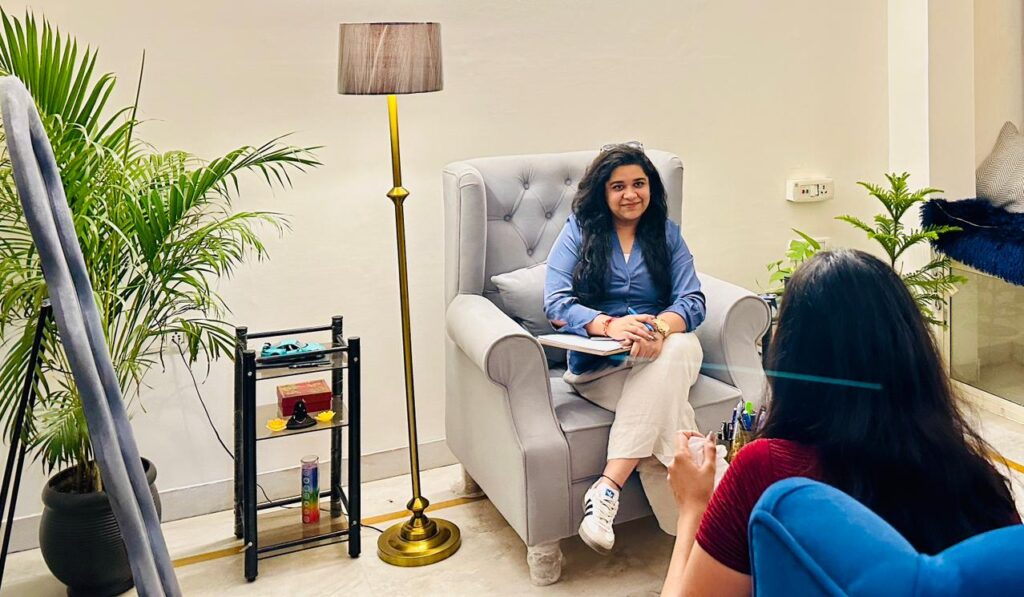
“You Don’t Have to Come Out to Me”
This is usually the first thing I say. And it surprises people.
Clients often come into the room ready to “explain” themselves – their identity, their attractions, their gender history, their pronouns. They’ve rehearsed it. Some have notes on their phone. And I get it; for many queer Indians, coming out has historically been transactional. You disclose, and then you wait to see how the other person reacts.
But therapy doesn’t work that way. I tell every client: you can use any label, no label, multiple labels, or change your mind midway through our work. My job is not to verify your identity. My job is to help you live with less suffering. Whether you call yourself gay, lesbian, bisexual, asexual, non-binary, questioning, or “just figuring it out,” none of that changes the care you receive from me.
This is the heart of LGBTQ-affirmative therapy – your identity is the starting point, not the subject.
What I Ask Instead (And Why)
Once that pressure is lifted, the real conversation begins. Here’s what I’m actually curious about in our first session:
Who knows, and who doesn’t?
Not because I want to push you to come out – that’s your call, on your timeline – but because the energy it takes to manage two versions of yourself is exhausting, and I want to understand how tired you are.
What does your week look like?
Sleep, work, relationships, scrolling. The texture of your daily life tells me more than any diagnosis.
Is there someone, anywhere, who knows you fully?
Even one person. A cousin, a school friend, an online community. Isolation does more damage to LGBTQIA+ mental health than almost any other single factor I see in practice.
What brought you in today, specifically?
Not last year. Not five years ago. Today. Because something tipped you over the edge of “I should probably talk to someone” into actually booking the session. That detail usually contains the work.
The Family Conversation I Have With Almost Every Client
If there’s one theme I encounter across nearly every LGBTQ+ client I see in Gurgaon, it’s family. Indian family systems are deeply enmeshed, which is beautiful in some ways and brutal in others.
I once worked with a 28-year-old software engineer – I’ll call him A – who had been out to his friends for almost a decade but couldn’t tell his mother. He kept saying, “She’ll have a heart attack.” After months of therapy, we realised the fear wasn’t really about her heart. It was about losing the version of himself that existed only in her eyes – the “good son.”
That’s the kind of grief I help clients sit with. The grief of not being fully known by the people you love most. The grief of choosing yourself when the cost is high.
We don’t always rush toward coming out. Sometimes the work is learning to hold the closet without letting it crush you. Sometimes it’s building enough of a life on your own terms that the family conversation becomes one chapter, not the whole book.
Why Online LGBTQ Counselling Has Become My Clients’ First Choice
A big shift I’ve seen post-2020 is that online LGBTQ counselling has become the default for many of my clients, not the backup. And honestly? I think it’s brilliant for this community.
Here’s why. If you’re still living with parents, sharing walls with siblings, or working from a PG in Sushant Lok, finding a private hour to talk about your gender identity or your relationship isn’t easy. LGBTQ therapy online lets you join from a parked car, a locked bedroom, a quiet café – even your office washroom on a bad day. I’ve had sessions from all of these.
For those exploring gender identity online counselling specifically – say, someone questioning whether they might be non-binary or trans – the digital format adds another layer of safety. You can change your display name. You can keep your camera off until you’re ready. You can sit with a notebook and look down when something feels too big to say out loud.
This is also why the best online therapy for LGBTQ+ clients isn’t just about convenience. It’s about access to people like you, regardless of which city or small town you’re sitting in. Searching for “transgender counseling near me” used to mean physically scanning your locality. Now it can mean finding the right specialist anywhere in the country.
What LGBTQ-Affirmative Psychotherapy Actually Looks Like in Practice
A lot of people imagine therapy as advice-giving. It isn’t. LGBTQ-affirmative psychotherapy is a specific framework that does three things consistently.
It treats queer identities as normal variations of human experience, not as the problem to be solved. It actively names and works through the impact of stigma – what we call minority stress – instead of pretending it doesn’t exist. And it doesn’t expect the client to do the emotional labour of educating the therapist. If I don’t know something about your community, your relationship structure, or your gender experience, it’s my job to learn – not yours to teach me.
In sessions, this might look like helping a client unpack the internalised homophobia they didn’t even realise they were carrying. It might mean supporting someone through hormone therapy decisions. Or working with a couple in a polyamorous relationship who’ve never had a therapist take their structure seriously.
This is the core of what we do at Core Mind Wellness – we don’t just tolerate queer identities, we centre them in the therapeutic work.
Common Concerns Clients Bring to Their First Session
Over the years, the worries I hear in that first hour have become almost predictable. If any of these sound like you, please know – you’re not alone, and none of them are silly.
“What if I’m not queer enough?” I hear this from bisexual clients almost weekly, especially those in opposite-gender relationships. Your identity isn’t measured by who you’re currently dating.
“What if therapy makes me realise something I can’t undo?” Therapy rarely creates new truths. It tends to surface the ones that were already there. We move at your pace.
“What if my therapist judges me?” This is exactly why finding the right LGBTQ-friendly therapist matters so much. A good fit isn’t a luxury. It’s the foundation.
“Can I afford this?” Mental health services should be accessible. Most reputable LGBTQ mental health services in Gurgaon, including ours, offer sliding scales or shorter session formats. Ask. It’s not rude.
How to Find the Best LGBTQ Psychologist in Gurgaon for You
If you’re at the start of this search, here’s what I’d actually look for, beyond just typing “LGBTQ therapist near me” into Google.
Check the therapist’s training and credentials – RCI licensing matters in India. Look at whether they explicitly mention LGBTQ-affirmative therapy on their website; vague “we welcome everyone” language often means they haven’t done the specific work. Read their bio for tone. Notice whether they use updated language around identity and pronouns. And trust your gut after the first call. You’re allowed to switch. You’re allowed to interview them.
Most importantly: a good therapist won’t make you feel like a case study. You should leave the first session feeling more like a person, not less.
A Final Word From My Side
If you’ve made it to the end of this article, something inside you is probably already moving. That quiet pull toward wanting support – that’s worth honouring. Whether you book a session with me, with someone else in Gurgaon, or with an online therapist in another city, please just take the step.
Therapy with a queer-affirming psychologist won’t fix everything. But it will give you a room where, for one hour a week, you don’t have to perform. And for most of my LGBTQ+ clients, that hour slowly becomes the place where the rest of their life starts to feel possible.
About the Author
Rishika Vashishtha is the Co-Founder of Core Mind Wellness, a Licensed Clinical Psychologist (A), Psychotherapist, and Psychometrician with 7+ years of experience supporting individuals across India. She specialises in LGBTQ-affirmative psychotherapy, anxiety, identity exploration, and relationship concerns.
Ready to take the first step?
If you’re looking for the best LGBTQ psychologist in Gurgaon, or want to begin online LGBTQ counselling from anywhere in India, the team at Core Mind Wellness is here when you’re ready. You can reach out through our contact page to book your first session. It can be the start of something quieter, kinder, and entirely your own.
Frequently Asked Questions
Who is the best LGBTQ psychologist in Gurgaon?
The best LGBTQ psychologist in Gurgaon is one who is RCI-licensed and formally trained in LGBTQ-affirmative psychotherapy. At Core Mind Wellness, Rishika Vashishtha specialises in queer-affirmative therapy with 7+ years of clinical experience.
How much does LGBTQ therapy cost in Gurgaon?
LGBTQ therapy in Gurgaon usually costs between ₹1,500 and ₹3,500 per session, depending on the therapist’s experience and format. Online LGBTQ counselling is often more affordable, and many practices offer sliding-scale fees.
Is online LGBTQ counselling as effective as in-person therapy?
Yes. Research shows online LGBTQ counselling is just as effective as in-person therapy for most concerns. For queer clients, it often works better because of added privacy and access to specialists outside your city.
What happens in the first LGBTQ therapy session?
In the first session, you won’t be expected to “come out” or explain your identity in detail. The focus is on understanding your current life, stress, and what brought you to therapy – at your pace, not the therapist’s.
Do I need a diagnosis to start LGBTQ therapy?
No, you don’t need a diagnosis to begin therapy. Many clients come in simply feeling stuck, isolated, or unsure about their identity – none of which requires a clinical label.
How do I find an LGBTQ-friendly therapist near me in Gurgaon?
Look for psychologists who specifically mention LGBTQ-affirmative therapy, hold RCI licensing, and use inclusive, updated language in their bios. A short discovery call before booking helps you check for fit.
Can I do gender identity counselling online if I’m still exploring?
Yes. Online gender identity counselling is designed exactly for this stage – when you’re questioning or unsure. A good therapist will help you reflect at your own pace, without pushing you toward any label.
Is therapy confidential? Will my family find out?
Yes, therapy is fully confidential – your therapist cannot disclose session content to family, employers, or anyone else. For online sessions, using a private device and headphones adds an extra layer of privacy.